Home / Magadh Diaries / History
Nalanda Mahavihara: what you are really looking at
Rows of red-brick walls can look like just ruins. Once you know what they were, Nalanda becomes one of the most moving places in India.
A university, 800 years long
Nalanda Mahavihara was a great Buddhist monastic university that flourished from about the 5th to the 12th century CE. Students and teachers came from across Asia, including China, Korea and Tibet. The Chinese pilgrim-scholar Xuanzang studied and taught here in the 7th century and left a detailed description of it.
The excavated site is a UNESCO World Heritage Site. What you walk through is only part of the original campus.
What to look for
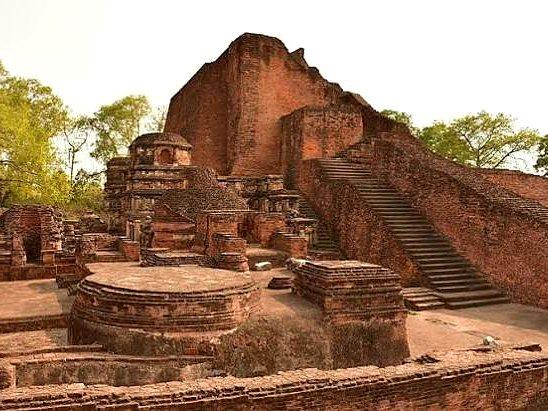
Monasteries: the long rows of rooms around courtyards were where monks lived and studied. Look for the stone beds, niches for lamps, and wells in the courtyards.
Temple No. 3: the tallest structure, a stepped temple built and rebuilt in several layers over centuries, with smaller votive stupas around it.
The great mounds still unexcavated around the site, which show how much more lies underground.
Practical guide
The site is usually open from about 9 am to 5 pm. Fees and timings change from time to time, so check at the gate or on the ASI website. Give the ruins two to three hours, ideally in the morning before the heat.
The Nalanda Archaeological Museum, opposite the entrance, holds sculptures, seals and objects found at the site. It is closed on Fridays.
Nearby: the Xuanzang Memorial Hall, and the Jain temples of Kundalpur a short drive away.
Respect the site
Do not climb on the walls or stupas. Keep to the paths and keep voices low, as many visitors come as pilgrims.
Questions
How long do I need at Nalanda?
Two to three hours for the ruins, and an hour for the museum.
Is Nalanda close to Rajgir?
Yes, about 15 km. Most visitors combine both in one trip.