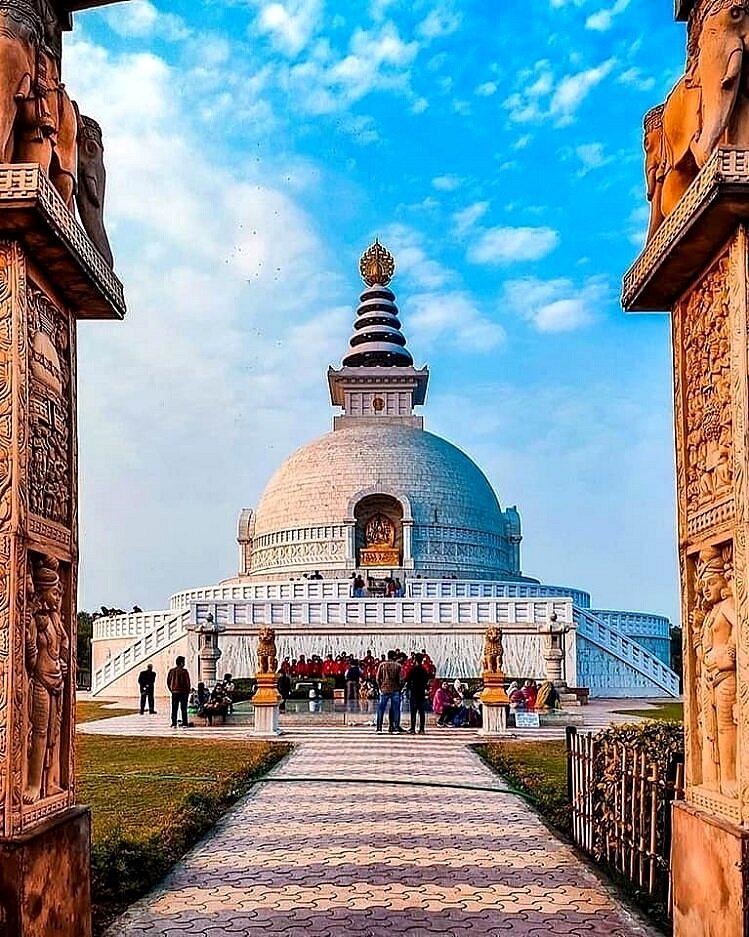
Home / Magadh Diaries / History
A short history of Magadh
For more than a thousand years, the small kingdom of Magadh shaped the history of India. Its heart is the land you travel through on our tours.
Rajagriha, the first capital
In the 6th century BCE, Magadh was one of the great kingdoms of north India, with its capital at Rajagriha, today's Rajgir, protected by hills and by a massive stone wall. King Bimbisara and his son Ajatashatru ruled here in the time of both the Buddha and Mahavira.
Pataliputra
The capital later moved to Pataliputra, on the Ganga at today's Patna, which grew into one of the largest cities of the ancient world.
The Mauryas
Chandragupta Maurya, guided by the scholar Chanakya, built an empire from Magadh that covered most of the subcontinent. His grandson Ashoka, after the war in Kalinga, turned to the Buddha's teaching and sent its message across Asia. Ashokan pillars, like the one at Vaishali, still stand.
The Guptas and Nalanda
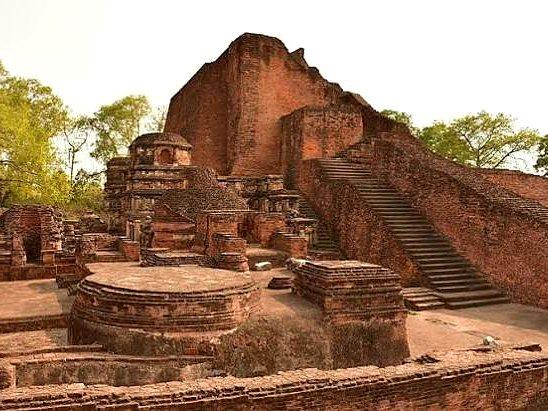
Under the Gupta kings, often called India's classical age, Nalanda Mahavihara was founded and grew into a centre of learning for scholars from across Asia. The great mathematician-astronomer Aryabhata worked in this region too.
The Palas
From the 8th century the Pala kings, great patrons of Buddhism, supported Nalanda and founded Vikramashila. Many of the finest bronze and stone sculptures in Bihar's museums come from this time.
Seeing it today
On a Magadh trip you can touch every layer of this story: the Cyclopean Wall of Rajagriha, the ruins of Nalanda, Ashoka's pillar at Vaishali, and the Bihar Museum in Patna.
Questions
Why is it called Magadh Explora?
Because our tours cover the heart of ancient Magadh: Rajgir, Nalanda, Pawapuri, Bodh Gaya and Gaya.